
To sell on social media in 2027, you need two things: a shop of your own where the sale happens, and the platforms where people find you. Instagram, Facebook, Pinterest and YouTube now send buyers to your own website’s checkout. TikTok Shop is the main platform still selling inside the app. In India, where TikTok is banned, WhatsApp does that job.
The biggest change most guides haven’t caught up with: Meta removed checkout from Facebook and Instagram Shops in 2025. Since then, buyers who tap a product on Instagram or Facebook pay on the seller’s own website (Meta for Developers). If your plan was to sell “only on Instagram”, you now need a website anyway.
The market is still growing fast. eMarketer forecasts US social commerce sales will pass $100 billion in 2026 and reach nearly $119 billion in 2027 (Retail Dive).
Published 16 November 2026. Fees and features checked against each platform’s pages that day; where a platform hasn’t confirmed a figure, we say so.
Short phone video from the stockroom: the format Reels and Trial Reels reward.
Which social platform is best for selling?
It depends on what you sell and where your customers are:
| Platform | Where checkout happens | Selling fee | Available | Best for |
|---|---|---|---|---|
| Your website | None from Meta; your payment provider’s fees apply | Meta’s supported Shops countries | Visual products, Reels, creator partnerships, DMs | |
| Your website | None from Meta | As Instagram | Catalogue ads, older audiences, local groups | |
| TikTok Shop | Inside TikTok | US: 6% on most categories in TikTok’s published table. UK: 9% | US, UK, nine EU countries, Southeast Asia and others. Not India | Impulse buys, creator affiliates, live selling |
| WhatsApp Business | In the chat where payments exist (India, Brazil); otherwise your website | App: free. API: per message | Worldwide | Repeat customers, enquiries, India |
| Your website | None; ads are paid | Catalogues in selected countries | Planned purchases: home, fashion, gifts, weddings | |
| YouTube Shopping | Your website | None for the store; creators earn commission | Affiliate programme expanding to 35 countries | Demos, reviews, longer explanations |
The pattern is clear: every platform except TikTok Shop sends the sale to you. That’s good news. You keep the customer’s email, the payment data and the relationship.
Can you still check out on Instagram or Facebook?
No. In June 2025, Meta began removing checkout from Facebook and Instagram Shops. By the end of August 2025 most shops had moved to checkout on the seller’s own website, and Meta’s in-app payments, payouts, returns and dispute handling ended (Value Added Resource). Meta also stopped collecting sales tax on these orders from 26 August 2025, so sellers handle it themselves (Shopify Help Center).
Product tags, shoppable posts and catalogue ads still work. They just lead to your website.
How do you sell on Instagram in 2027?
- Switch to a professional account and link it to a Facebook Page in a Meta business portfolio.
- Set up a website store on a domain you’ve verified with Meta. Shopify’s free Facebook & Instagram app, built by Meta, syncs your catalogue and installs the tracking pixel (Shopify App Store).
- Check your eligibility. Your business must be in a country Meta supports for Shops, and your products must follow Meta’s commerce policies (Shopify Help Center).
- Tag products in posts, Reels and Stories once your shop is approved.
- Post short video. Reels can now be up to three minutes long. Trial Reels let you test a Reel on people who don’t follow you before your followers see it (Instagram).
- Answer DMs fast. Many Instagram sales are still a conversation before they’re a checkout.
- Add ads once organic posts show what works. Boost the posts that already sell.
Instagram has more than 3 billion monthly users, according to Meta’s September 2025 figure (Thurrott). Reaching them depends on what the algorithm thinks they’re interested in. Since June 2026, users can see and edit the topics behind their recommendations, and recommended posts carry topic labels (Instagram). Clear, consistent subjects help the right people find you.
How does TikTok Shop work, and what does it cost?
TikTok Shop lets people buy without leaving the app, from videos, live streams, creators’ showcases and a shop tab. It’s the strongest platform for impulse purchases and creator-led selling.
Availability. TikTok Shop operates in the US, UK and Southeast Asia, among other markets. From 15 June 2026 it added Austria, Belgium, the Netherlands and Poland to France, Germany, Italy, Spain and Ireland (Social Media Today). TikTok has been banned in India since June 2020, and the government confirmed in August 2025 that the ban stands (Business Today).
The US question is settled for now. The deal creating a US joint venture for TikTok closed in January 2026 (MacRumors). TikTok’s announcement said e-commerce stays with TikTok’s global US entities rather than the joint venture (Fortune).
Fees. Budget for three layers:
- Referral fee. TikTok’s published US table, revised in May 2026, shows 6% for most categories. Several seller sites report a rise to 8% from August 2026, which TikTok hasn’t publicly confirmed, so check Seller Center for your category. In the UK, the base commission rose to 9% in September 2024 (Retail Week).
- Creator commission, if creators sell your products as affiliates. You set the rate.
- Promotion costs. TikTok’s US Smart Promotion charges 3.5% of total shop sales, rising to 4.5% during major campaigns (PPC Land).
Shopify’s free TikTok app, built by TikTok, syncs products and orders (Shopify App Store). eMarketer estimated TikTok Shop at about a fifth of US social commerce in 2025.
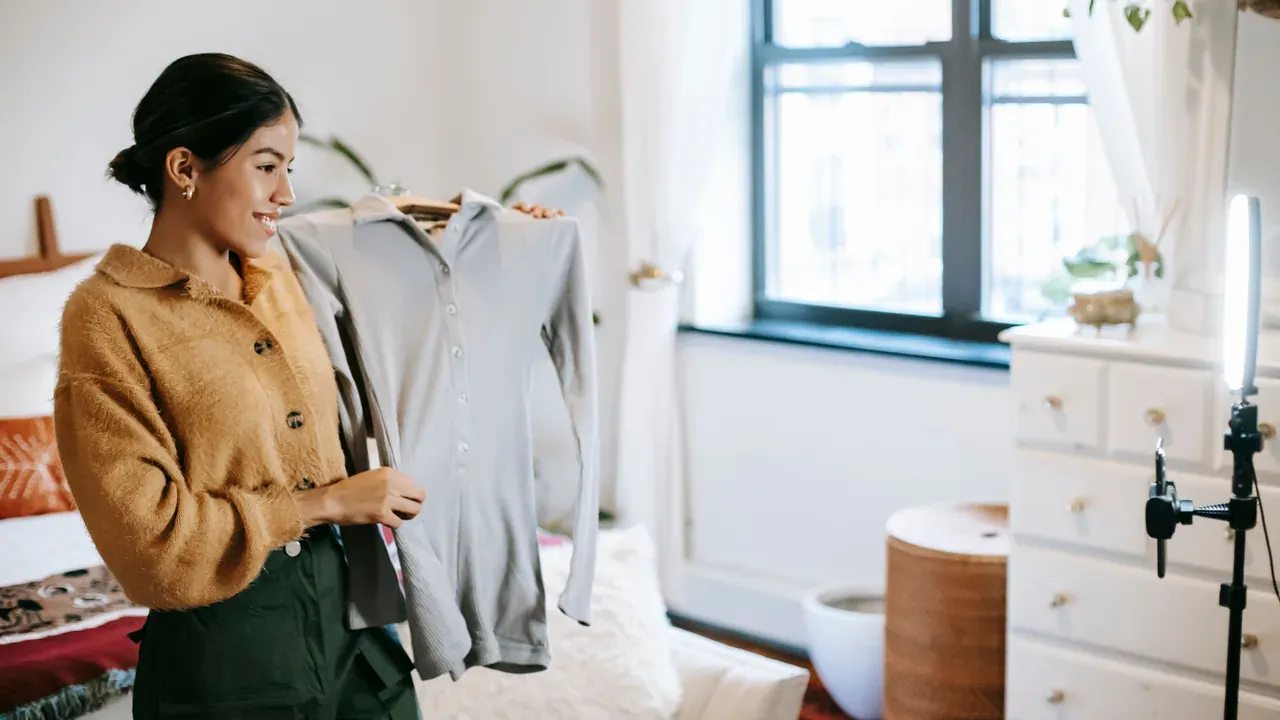
A one-person live-shopping setup: a phone, a ring light and the stock within reach.
How do you sell on WhatsApp Business?
WhatsApp is the main selling channel for small businesses in India and much of the world. There are two versions:
- The WhatsApp Business app is free, for one phone and a small team. It has a catalogue of up to 500 products, each with up to 10 photos or videos, that you can share in chats and Status (WhatsApp). It had more than 200 million monthly active users at Meta’s last published count, in 2023 (TechCrunch).
- The WhatsApp Business Platform (API) is for automation and bigger teams, through a provider. Since 1 July 2025, Meta has charged per delivered template message: marketing, utility and authentication. From 1 October 2026, replies to customers are charged too, after 1,000 free a month per phone number. Indian businesses have been billed in rupees since 1 January 2026 (Meta for Developers).
Payments in the chat exist in some countries. In India, the user cap on WhatsApp’s UPI payments was lifted at the end of 2024 (TechCrunch). In 2025, Meta added one-tap QR payments for small businesses on the WhatsApp Business app (Meta). Brazil has Pix payments in the app. Elsewhere, send a link to your website checkout.
Click-to-WhatsApp ads on Facebook and Instagram open a chat instead of a web page. They often work better than website ads for considered purchases, where people want to ask a question before buying.
Should you sell on Pinterest, YouTube or Facebook Marketplace?
- Pinterest had 661 million monthly users in the third quarter of 2026, a record (Pinterest). People use it to plan, so it suits home, fashion, food, weddings and gifts. Catalogues need a business account, a claimed website and the Pinterest tag (Pinterest).
- YouTube Shopping lets creators tag your products and earn commission. YouTube says its affiliate programme has more than 1.3 million creators and is expanding to 35 countries by the end of 2026 (YouTube). It suits products that need demonstrating.
- Facebook Marketplace is strongest for local, secondhand and one-off sales. Meta launched a separate Seller app for US Marketplace sellers in July 2026.
Do you need a website to sell on social media?
For most platforms, yes. Instagram, Facebook, Pinterest and YouTube send buyers to your website to pay. Even on TikTok Shop and WhatsApp, a website gives you:
- The customer relationship. You get the email address, so you can sell again without paying a platform each time.
- Insurance. A platform can change its rules, raise fees or disappear from a country. TikTok in India and Meta’s checkout are two recent examples.
- Search and AI visibility. Social posts rarely rank in Google or get quoted in AI answers the way a product page can.
A small Shopify store connects to Instagram, Facebook, TikTok, Pinterest and YouTube through free sales channel apps, so you manage stock and orders in one place. Our store setup guide walks through it.
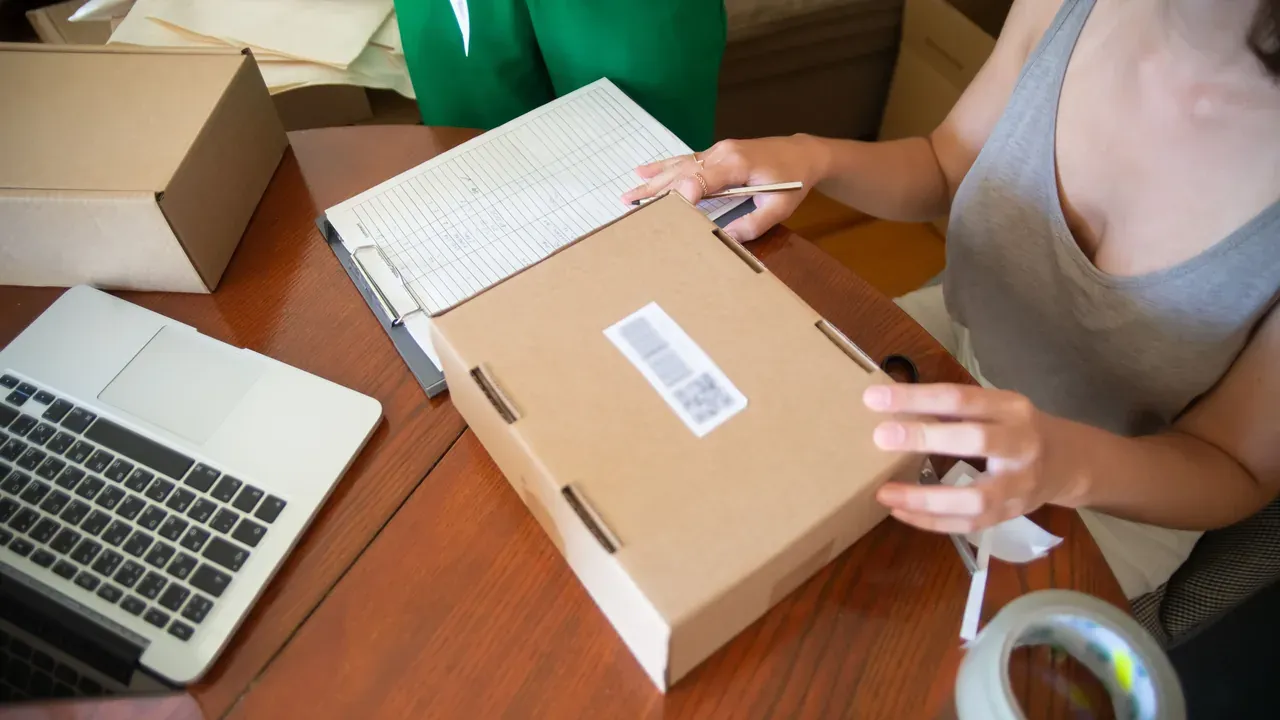
Orders from every channel land in one store, so stock, labels and customer emails stay in one place.
Do you have to label sponsored and gifted posts?
Yes, in every major market. If a creator posts about your product because you paid them, gave them the product or pay them commission, the post must say so clearly:
| Market | Rule | What’s accepted |
|---|---|---|
| United States | FTC Endorsement Guides | “Ad”, “advertisement”, “sponsored”, #ad. Not “sp”, “spon” or “collab”, and not hidden in a bio (FTC) |
| United Kingdom | ASA, CAP and CMA guidance, October 2026 | #Ad or “Advert” up front. “Sponsored”, “spon” and “gifted” are no longer enough, and the CMA can now fine directly (Lewis Silkin) |
| India | ASCI influencer guidelines | #Ad, #Advertisement, #Sponsored, #Collaboration, #Partnership, #Employee or #FreeGift, up front, with set times on screen for video (ASCI) |
The rules apply to your brand as well as the creator. Put the disclosure requirement in every creator agreement.
Do influencers actually drive sales?
They do, but buyers check before they buy. PYMNTS Intelligence found that 56% of US consumers buy something an influencer recommended at least once a year, and 95% of them research it elsewhere first (PYMNTS). Salsify’s late-2025 survey found 23% of shoppers bought because of an influencer, down from the year before, while 22% bought something an AI tool recommended (Salsify).
That “research elsewhere” step lands on your website, your reviews and AI answers. Social media starts the sale; your own pages close it.
A starting plan for selling on social media
- Pick one main platform where your customers already spend time, and one backup.
- Set up a website store and connect it to that platform’s sales channel.
- Post short video three times a week showing the product in use. Test new ideas with Trial Reels.
- Answer every comment and DM within a day.
- Capture emails and WhatsApp opt-ins with a first-order offer.
- Work with three to five small creators in your niche on commission before paying anyone a flat fee.
- Put ad money behind what already sells organically, and judge it on cost per new customer.
Our paid ads guide covers step 7, and how to get more customers puts social media alongside every other channel.
Getting help
If you’d rather hand over the ads, our paid ads management service runs Meta and Google campaigns at fixed monthly prices. Or book a free 30-minute call and we’ll tell you which platform suits your products.
FAQs
Can you still buy directly on Instagram?
No. Meta removed checkout from Instagram and Facebook Shops in 2025, and most shops had moved over by the end of August 2025. Product tags and shoppable posts still work, but buyers pay on the seller’s own website.
Is it free to sell on Instagram?
Meta charges no selling fee, because the sale happens on your own website. You pay your website platform and payment provider’s normal fees, plus any ads you choose to run.
What are TikTok Shop’s seller fees?
In the US, TikTok’s published referral fee is 6% for most categories, with reports of a rise to 8% from August 2026 that TikTok hasn’t publicly confirmed. The UK base commission has been 9% since September 2024. Creator commissions and optional promotion programmes are extra.
Is TikTok Shop available in India?
No. TikTok has been banned in India since June 2020, and the government confirmed in 2025 that the ban remains. Indian sellers use Instagram, WhatsApp, YouTube and their own websites instead.
How much do WhatsApp Business messages cost?
The WhatsApp Business app is free. The WhatsApp Business Platform charges per delivered template message by category, and from 1 October 2026 it also charges for service replies beyond 1,000 a month per phone number. Rates vary by country and are billed in rupees in India.
Do I need a website to sell on social media?
For most platforms, yes. Instagram, Facebook, Pinterest and YouTube send buyers to your website to pay. A website also lets you keep customers’ contact details and protects you if a platform changes its rules.
Do I have to use #ad on gifted products?
Yes, in the US, UK and India, if a creator posts about a product they received free, were paid for, or earn commission on. In the UK, “gifted” on its own is no longer considered a clear enough label.
Written by Vibhora
Shopify development, branding, custom apps, SEO, paid ads and store care for small and growing brands - one team, fixed published prices.