Local SEO is how a business shows up when someone nearby searches for what it does: in Google Maps, the “local pack” of three results, and now in AI answers. In 2027 it comes down to three things:
- A complete, verified Google Business Profile in the right primary category.
- A steady flow of recent, genuine reviews that you reply to.
- A website that clearly says what you do and where.
Google says it ranks local results on relevance, distance and prominence, and that “there’s no way to request or pay for a better local ranking” (Google).
What changed for 2027 is where people look. In BrightLocal’s 2026 survey of US consumers, 45% now use AI tools for local recommendations, up from 6% a year earlier. Google’s share fell from 83% to 71% (BrightLocal). The good news is that AI tools mostly quote the same sources as the map: your Business Profile, your reviews and your website.
Published 16 November 2026. Google’s features and policies checked on Google’s own help pages that day.
A map search on a phone. Distance to the searcher counts, but it is the factor you can do least about.
How does Google rank local businesses?
Google names three factors on its own help page (Google):
| Factor | What Google means | What you can control |
|---|---|---|
| Relevance | “How well a Business Profile matches what someone is searching for” | Your primary category, services, description and website content |
| Distance | “How far each business is from the customer” | Almost nothing. Your address is your address |
| Prominence | “How well-known a business is” | Reviews, rating, mentions and links from other sites |
Practitioners agree on the details. Whitespark’s 2026 survey of 47 local search experts ranked these as the top five factors for the local pack (Whitespark):
- Primary Business Profile category
- Proximity to the searcher
- Keywords in the business name
- A physical address in the city being searched
- Being open at the time of the search
Number 3 is a trap. Keywords in the business name do help, but Google’s guidelines say the profile name must match your real-world name. Adding “Best Plumber London” to the name risks suspension (Google). If you want the benefit honestly, it has to be your actual trading name, on your signage and paperwork.
How do you set up a Google Business Profile?
A profile is free. Setting one up properly takes an afternoon.
- Check you’re eligible. You need to meet customers in person, at your premises or at theirs. Online-only businesses, virtual offices and PO boxes aren’t eligible (Google).
- Claim or create the profile at business.google.com, using your real business name.
- Choose the primary category carefully. It’s the strongest relevance signal you control. Add as few extra categories as genuinely apply; Google’s guidelines say to use “the fewest number of categories” needed.
- Set your address or service area. Businesses that visit customers, such as plumbers and cleaners, should hide the address and set a service area.
- Verify. Google chooses the method, and you can’t change it. Options include phone, text, email, a live video call, a postcard or a recorded video (Google).
- Fill in everything: hours (including holiday hours), services, products, a description, photos of the outside, inside, team and work, and your website link.
- Add a way to message you, if it’s offered in your region. Verified profiles can now add a WhatsApp or text chat link (Google).
Video verification is the method Google recommends when it’s offered. The recording must be live, unedited, continuous and at least 30 seconds long. It has to show where you are (street signs or landmarks), that the business exists (signage matching the profile name) and that you run it (employee-only areas, tools, a branded van, or a permit or utility bill) (Google).
What changed on Google Business Profile in 2026?
Several features older guides still recommend have gone, and some new ones have arrived:
| Change | Date | What it means |
|---|---|---|
| Free business.site websites shut down | March 2024 | If your only website was the free one Google built, you no longer have a website |
| Chat and call history removed | 31 July 2024 | Use the WhatsApp or text chat link instead (Google) |
| Q&A retired | November 2025 onwards | The Q&A tool for developers closed on 3 November 2025, and questions moved to Ask Maps (Google) |
| FAQ rich results removed from Search | 7 May 2026 | FAQ markup no longer produces the expandable result in Google (Google) |
| Ask Maps launched | 12 March 2026, US and India | Gemini answers questions about places in Maps. It’s expanding to more than 30 European countries (Google) |
| Gemini can draft review replies | 10 June 2026 | The Gemini app connects to your profile to draft replies and explain your stats, outside the EEA and UK (Google) |
Ask Maps changes what a “complete profile” means. When someone asks Maps a question such as “is this café good for working with a laptop?”, Gemini answers from your profile details, your reviews and your website. Ask Maps draws on more than 300 million places and reviews from over 500 million contributors (Google). You can’t edit those answers directly. You can only make sure the facts they’re built from are complete and current.
How many reviews do you need, and how do you get them?
Enough recent ones to pass the bar customers set. BrightLocal’s 2026 survey of 1,002 US adults found (BrightLocal):
- 97% read reviews for local businesses, and 41% “always” do, up from 29%.
- 74% care about reviews from the last three months.
- 68% only use businesses rated 4 stars or higher, and 31% only use businesses rated 4.5 or higher.
- 47% won’t use a business with fewer than 20 reviews.
- 89% expect the owner to reply, and 50% are put off by templated replies.
So the targets for 2027 are 20 reviews or more, a rating above 4, new reviews every month, and a personal reply to each one.
How to ask, legally:
- Ask everyone, in person at the end of the job, then by text or email with a direct review link from your profile.
- Don’t offer anything in return. Google bans reviews in exchange for “payment, discounts, free goods” (Google).
- Don’t filter. Asking only happy customers (“review gating”) is also against Google’s policy.
- Don’t let staff or family review you. Current and former employees count as a conflict of interest.
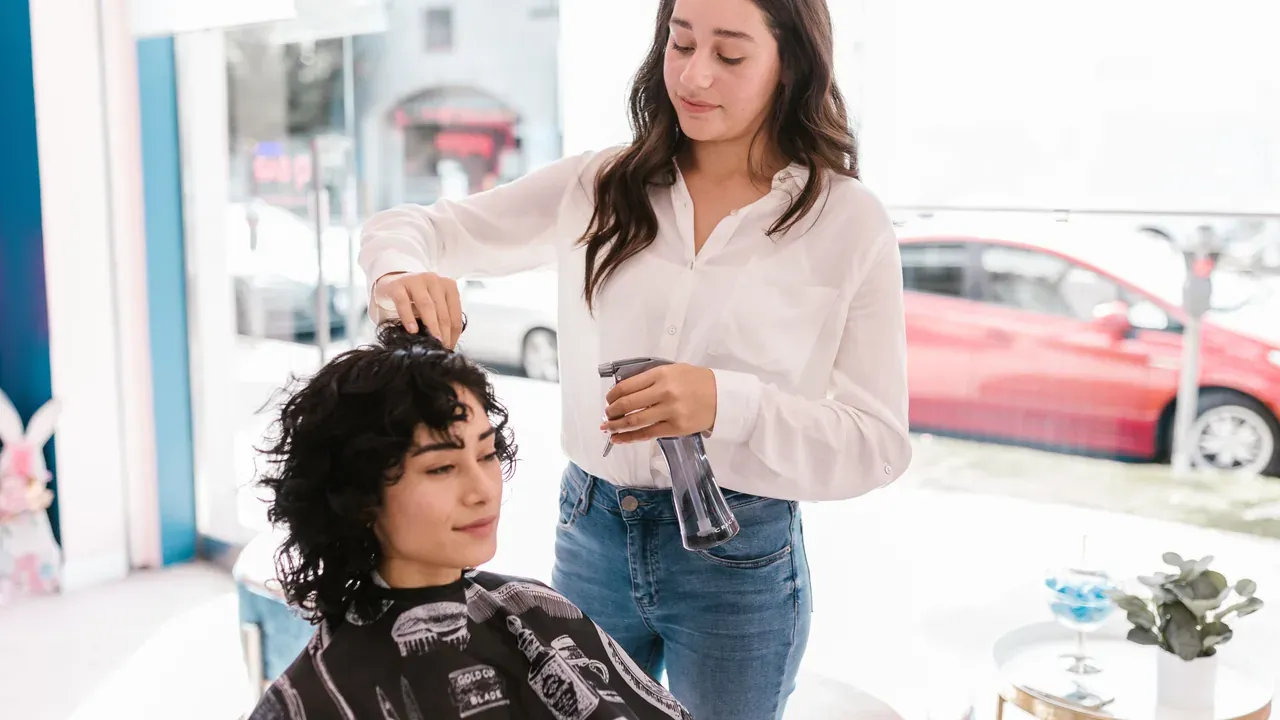
Ask every customer for a review in person, at the end of the job.
What do the review laws say in the US, UK and India?
Fake reviews are now illegal, not just against Google’s rules:
| Country | Rule | Key points |
|---|---|---|
| United States | FTC rule on fake reviews, in force 21 October 2024 | Bans fake and AI-written reviews, buying reviews that must be positive, undisclosed reviews from insiders, and suppressing negative reviews with threats. Civil penalties apply (FTC) |
| United Kingdom | Digital Markets, Competition and Consumers Act, in force 6 April 2025 | Bans fake reviews, hidden incentivised reviews and misleading presentation. The CMA can fine up to 10% of global turnover (CMA guidance) |
| United Kingdom | Google’s commitments to the CMA, January 2025 | UK businesses caught inflating ratings get a warning on their profile, and lose new reviews (CMA) |
| India | IS 19000:2022 standard for online reviews | A voluntary standard from the Bureau of Indian Standards on collecting and publishing reviews honestly, launched in November 2022 |
Does local SEO still matter with AI Overviews and ChatGPT?
More than before, because AI tools build their answers from local SEO’s raw material. BrightLocal studied about 200,000 local prompts across ChatGPT, Google’s AI Mode and AI Overviews in 2026 and counted 1.97 million citations (BrightLocal):
| Source cited | Share of citations |
|---|---|
| Businesses’ own websites | 42% |
| Google Business Profiles | 28.6% |
| Yelp | 9.5% |
| 2.2% |
Google’s AI answers leaned on Business Profiles, while ChatGPT leaned more on Yelp and Bing. That’s why the profile listings on Apple and Bing below matter too.
For “near me” style searches, the map still dominates. Whitespark’s 2025 test of 540 local searches found AI Overviews on 15% of local-intent queries, against the local pack on 93% (Whitespark).
Google’s own advice is that there is no separate trick for AI. Its guidance says “there are no additional requirements to appear in AI Overviews or AI Mode” (Google). It also says Business Profile data helps visibility in AI responses (Google). Good local SEO is AI search optimisation.
What should a local business’s website include?
Your website is the most-cited source in AI answers, so it has to state the facts plainly:
- A page for each main service, written in your customers’ words: “boiler repair in Leeds”, not “thermal solutions”.
- Your name, address and phone number, exactly as on your Business Profile, in the footer of every page.
- Opening hours, the areas you serve, prices or price ranges, and answers to the questions customers phone to ask.
- LocalBusiness structured data. Google requires
nameandaddress, and recommends hours, phone, website, price range and geo-coordinates (Google). Don’t mark up star ratings from reviews you collected yourself: Google doesn’t show stars for reviews a business controls about itself. - A fast mobile page. Most local searches happen on a phone.
Should you list on Apple Maps and Bing Places too?
Yes. Both are free, and they feed answers that Google doesn’t control:
- Apple Business replaced Apple Business Connect in April 2026. It’s free in more than 200 countries, and it controls how you appear in Apple Maps, Siri and Wallet (Apple). Apple Maps use for finding local businesses rose from 14% to 27% in a year in BrightLocal’s survey.
- Bing Places moved to bing.com/forbusiness in October 2025, and it can import your Google profile (Microsoft). Bing’s index feeds Copilot, and ChatGPT’s local answers have drawn on Bing.
Keep the name, address, phone and hours identical everywhere. Inconsistent details make it harder for any engine to be sure it’s the same business.
What’s different for local businesses in India?
Two things. Ask Maps launched in India on the same day as the US, so Indian businesses are among the first whose Maps answers come from Gemini. And WhatsApp is the default way to contact a business. Add the WhatsApp chat link to your profile where it’s offered, and make sure the number on your profile is the one your team actually answers on WhatsApp.

In India, WhatsApp is the default way to contact a business, so answer on the number you list.
A 30-day local SEO checklist
- Week 1: claim, verify and complete your Google Business Profile, with the correct primary category and real photos.
- Week 1: list the business on Apple Business and Bing Places with identical details.
- Week 2: add or fix your website’s service pages, name/address/phone footer and LocalBusiness structured data.
- Week 2: set up a review request after every job or order, with your direct review link.
- Week 3: reply to every existing review, personally.
- Week 4: post an update, an offer or new photos on your profile, and check your search terms in the profile’s performance report.
- Every month after: new photos, review replies within a few days, and holiday hours set in advance.
Expect the first movement within a couple of months, and steady gains over a year. Local SEO compounds slowly, and there’s no paid shortcut. If you sell online as well, our Shopify SEO guide covers the ecommerce side, and how to get more customers puts local search alongside every other channel.
Getting help
If you’d rather hand it over, our SEO and answer-engine optimisation service covers profiles, websites and AI visibility, at fixed prices. Or book a free 30-minute call and we’ll tell you what to fix first.
FAQs
How do I rank higher on Google Maps?
Choose the most accurate primary category, complete every field of your Google Business Profile, and earn a steady flow of genuine reviews with a personal reply to each. Make sure your website states your services and location plainly. Google ranks local results on relevance, distance and prominence, and says you can’t pay for a better ranking.
Is a Google Business Profile free?
Yes. Creating, verifying and managing a Google Business Profile is free. Google’s paid Local Services Ads and Search ads are separate and optional.
How long does local SEO take to work?
A newly completed and verified profile can start appearing within weeks. Ranking well against established competitors usually takes several months of steady reviews and website improvements, because prominence builds slowly.
Can I have a Google Business Profile without a shop?
Yes, if you serve customers in person at their location. Set a service area and hide your address. Online-only businesses, virtual offices and PO boxes aren’t eligible for a profile.
How do I verify my Google Business Profile without a postcard?
Google chooses the verification method, and video verification is the one it recommends when available. You record a live, unedited video of at least 30 seconds showing your location, your signage and proof that you run the business, such as tools, employee-only areas or a utility bill.
Can I ask customers for Google reviews?
Yes. Ask every customer, and send them your direct review link. Don’t offer discounts or gifts in exchange, don’t ask only the happy ones, and don’t let staff review you. These are against Google’s policy and, in the US and UK, can break the law.
What happened to Q&A on Google Business Profile?
Google retired the Q&A feature from late 2025 and moved questions to Ask Maps, a Gemini feature in Google Maps that launched in March 2026. Ask Maps answers from your profile, reviews and website, so keeping those complete is how you shape its answers.
Does local SEO still matter with AI search?
Yes. In BrightLocal’s 2026 study of local AI answers, businesses’ own websites were 42% of citations and Google Business Profiles 28.6%. AI tools build local answers from the same sources local SEO improves.
Written by Vibhora
Shopify development, branding, custom apps, SEO, paid ads and store care for small and growing brands - one team, fixed published prices.