Service 05 of 10
Custom Web & Mobile Apps
The tool your business keeps describing and no subscription quite does — web apps, portals, internal tools and mobile apps, built and handed over.
Built on
- React
- Next.js
- React Native
- TypeScript
- ASP.NET
 05 · Design & build
Not sure this is the one you need?
If software you can subscribe to already does the job, buy that instead.
A booking tool, a CRM or a Shopify app at a monthly fee is usually cheaper than owning code. One scope call establishes whether your requirement is the exception, before anyone quotes a build.
Book a scope call- From
- $2,999
- Pricing
- 4 published tiers
- First reply
- Within one business day
250+ Brands shipped
Since 2024.
85+ Storefronts maintained
Themes, apps and Hydrogen.
1.5s Median LCP after rebuild
Mobile field data, not a lab score.
1 day To a real first answer
One business day. A plan, not a deck.
Who this is for
Who Custom Web & Mobile Apps is for
The business runs on a spreadsheet nobody trusts any more.
Orders, schedules or stock live in a shared sheet with colour-coded rows, a tab nobody remembers creating and one person who knows which column is correct. It worked at five customers. It does not work at fifty.
Your customers keep asking for things a portal should show them.
Where is my order, can you resend the invoice, what did we agree last time. Every one of those emails is a record that already exists somewhere in your business, behind a login nobody outside it has.
The work happens away from a desk.
Drivers, field staff, technicians or customers on the move need it on a phone, sometimes without signal. A website in a browser tab is not the same thing, and they will tell you so by not using it.
The argument
Buy it first, if you can
Most requests for custom software start in the same place. Someone in the business has a job that keeps going wrong — quotes assembled by hand, a schedule that lives in one person’s head, customers emailing to ask what an order is doing — and somewhere along the way they decided the answer was an app.
Sometimes it is. Often the honest first answer is a product you can subscribe to. Booking systems, CRMs, form builders, help desks and the Shopify App Store between them cover a great deal of what small and growing businesses describe to us, for a monthly fee smaller than a week of development. Owning software means owning its maintenance for as long as you rely on it, and that cost does not appear on the first invoice.
So the first conversation is about the job, not the build. What has to happen, who does it, how often, and what it has to connect to. If an existing product does most of it, we will say so and name it. Custom software earns its cost when the missing part is the part your business actually competes on — the quoting logic nobody else has, the process that makes your service better than the next one — or when the subscriptions needed to approximate it would cost more each year than the thing itself.
What we build
Four shapes cover most of the work.
Web applications are browser-based software that does a specific job: a quoting tool, a booking flow, a configurator, a marketplace for a niche. They are the right shape for most first builds, because there is nothing to install and no store review between you and your users.
Customer portals give your customers a login and somewhere to find their own orders, documents, bookings and history. Done properly, a portal removes a category of email rather than adding a channel.
Internal tools and admin dashboards are the screens your team works in all day. They usually replace a spreadsheet, and the measure of success is that nobody opens the spreadsheet again.
Mobile apps are for work that happens away from a desk, or for customers who will open the thing several times a week. We build iOS and Android together, React Native by default, and publish under your own developer accounts.
Underneath all four sits an API, and usually integrations: into a Shopify store, a WordPress site, a payment provider, a CRM or an accounting system. That connective work is often most of the value, and it is scoped as its own item rather than hidden inside “build”.
Web app, mobile app, or both
Start with a web app unless there is a reason not to. It runs on every phone, tablet and laptop with a browser, it updates the moment you deploy, and it does not wait on Apple or Google to approve a change.
The reasons not to are real ones. The people using it are in vans, on site or on a shop floor, sometimes without signal. They need the camera, location or push notifications. They will open it many times a day and expect it to be one tap away. Any of those points towards a mobile app, and none of them is “it would be nice to be in the App Store”.
Many businesses end up needing both. The way to make that cheap later is to design the API properly for the first one, so the second is a new front end on a back end that already exists rather than a second project.
The stack, and why it is deliberately unremarkable
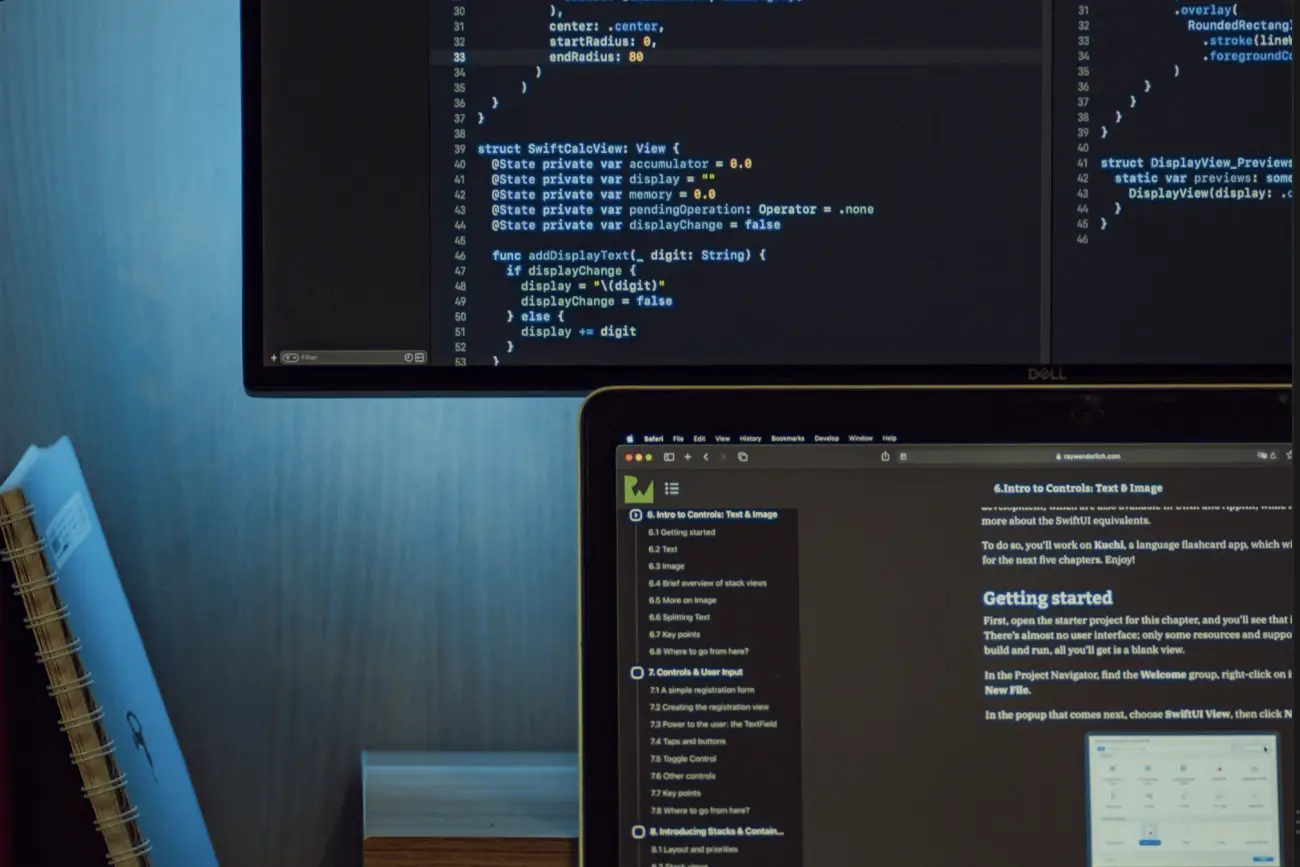
On the web we build in React and Next.js, in TypeScript. On mobile, React Native by default — one codebase for iOS and Android, sharing language, patterns and often code with the web app, with native modules where a device feature needs them. Where a business already runs on .NET, we build the back end in ASP.NET rather than handing your team a second stack to support.
None of these is a fashionable choice, and that is the point. They are widely used, well documented and easy to hire for, which matters more than anything else on the day you want another team, or your own, to pick the software up. An application built on an obscure framework is an application with one possible maintainer.
How a build runs
The specification is written down and approved before application code is written. It names the screens, the user roles, the data model, the integrations and the acceptance criteria, with a clickable prototype of the core flow. That prototype is where most misunderstandings surface, and they are far cheaper to fix there than in code.
The build is billed in milestones, each against something you can use. You get a working link, or a test build on your own phone, in the first milestone. It will be incomplete. It is still the most reliable way to discover that the requirement everyone agreed on is not quite the requirement the business has.
Before launch, the people who will use the software every day work through it on real data and real devices. Then it goes live: a production deployment for the web, and App Store and Google Play submission for mobile, review correspondence included.
After launch, and who owns it
Software does not stay finished. Apple and Google ship new operating systems every year, Google Play raises the Android version that updates must target, browsers change, and every library underneath the app releases security fixes. We track the changes that touch your software and tell you before they break it, on a retainer or by the hour.
And it is yours throughout. The source sits in your repository from the first commit, the hosting is in your name, the apps are in your developer accounts, and the runbook explains how to deploy, roll back and restore. If you take it in-house or hand it to someone else, there is nothing to extract and nothing to negotiate.

What we do
What Custom Web & Mobile Apps covers
- 01
Web applications
Browser-based software in React and Next.js, written in TypeScript — the right shape for most first builds, because there is nothing to install and no store review between you and your users.
- 02
Customer portals
Somewhere your customers log in to see their orders, documents, bookings or account, so the questions they currently email you about answer themselves.
- 03
Internal tools and admin dashboards
The screens your team works in all day — approvals, scheduling, stock, reporting — replacing the shared spreadsheet that three people edit at once.
- 04
Cross-platform mobile apps
iOS and Android from one codebase, React Native by default, with native modules where the device demands them. Built for the App Store and Google Play, and submitted under your accounts.
- 05
APIs and integrations
Typed, documented APIs, and the connections into Shopify, WordPress, payment providers, CRMs and accounting systems that the software has to agree with.
- 06
ASP.NET for .NET teams
If your business already runs on .NET, we build in it rather than introducing a second stack your team then has to support.
What you get
Everything on this list is a thing you can open.
Deliverables, not adjectives — 8 artefacts, each one a file, a repository or a document.
- The source in a repository you own, with the commit history intact
- The application deployed to hosting in your name, not ours
- iOS and Android builds published under your App Store and Google Play accounts
- A data model with its full migration history
- API documentation for every endpoint the software exposes
- An automated test suite running in the deployment pipeline
- A runbook — deploy, roll back, rotate credentials, restore from backup
- A written handover call, recorded
Technically
What a Vibhora app is actually made of.
- Web
- React and Next.js in TypeScript, server-rendered where search or first load matters, a client application where it does not
- Mobile
- React Native by default, one codebase for iOS and Android, native modules where a device feature requires them
- Back end
- Typed APIs on Node, or ASP.NET where your team already runs .NET, with roles, permissions and an audit log designed in from the start
- Integrations
- Shopify, WordPress, payment providers, CRMs and accounting systems, through documented APIs and verified webhooks
- Pipeline
- A preview deployment per pull request, tests run on every change, and TestFlight and Google Play internal testing builds before any release
- When we say no
- If an existing product or a Shopify app does the job for less than the build would cost to maintain, we say so rather than quoting the build
Acceptance criteria, every build
- LCP
- < 2.0 s p75 mobile
- INP
- < 200 ms
- crash-free
- ≥ 99.5 % of sessions, mobile
- test coverage
- ≥ 80 % on business logic
- accessibility
- WCAG 2.2 AA, zero critical issues
Web vitals are measured on the core signed-in routes on a mid-range Android phone over a throttled 4G connection before launch, and in the field once there is traffic to measure. Crash-free sessions come from the app's own crash reporting over its first 30 days in the stores. Coverage is counted on the modules that hold your business rules, not on layout code, and accessibility is an automated audit plus a manual keyboard and screen-reader pass on every core flow.
Brands we build and maintain for









How it runs
The order matters more than the estimate.
Scope call
One call about the job the software has to do, who uses it and what it must connect to. If an existing product already does it, this is where we say so — before there is anything to invoice.
Written specification
Screens, user roles, the data model, the integrations and the acceptance criteria, written down with a clickable prototype of the core flow. You approve it before anyone writes application code.
Build in milestones
Built in stages, each one billed against something you can use. You get a working link — or a test build on your phone — in the first milestone, not at the end.
Testing with your users
The people who will use it every day work through it on real data and real devices, against the edge cases your business actually has, before it goes live.
Launch
Production deployment for the web, App Store and Google Play submission for mobile. We handle the review correspondence and any resubmissions.
After
Operating systems, browsers and dependencies all move every year. We tell you which changes touch your software before they break it.
The honest part
When you don't need custom software
Custom software is a permanent commitment, not a purchase. Once it ships it needs hosting, security updates, new operating system versions and someone who understands it — every year, for as long as the business relies on it. If a booking system, a CRM, a form builder or a Shopify app already does the job for a monthly fee, that is almost always the cheaper answer, even if it does only most of what you described. Build when the missing part is the part your business actually competes on. We would rather tell you that on the scope call than invoice you for finding out.
If software you can subscribe to already does the job, buy that instead.
Built with
The full stackTools and platforms
- React
- Next.js
- React Native
- TypeScript
- ASP.NET
Questions
What people ask before they commission this.
Who owns the code for a custom app Vibhora builds?
You do. The source lives in a repository you own from the first commit, the application runs on hosting in your name, and mobile apps are published under your own App Store and Google Play developer accounts. Nothing we build for you depends on our accounts or on us staying involved for it to keep running.
Do you submit mobile apps to the App Store and Google Play?
Yes, as part of the build. The apps are submitted under your developer accounts — Apple's Developer Program and a Google Play Console account, both of which carry their own fees paid to Apple and Google. We prepare the listings, run the builds through TestFlight and Google Play's testing tracks, and handle the review correspondence. Rejections on a first submission are common, so review time is built into the timeline rather than the launch date.
What maintenance does custom software need after launch?
Every year Apple and Google ship new operating system versions, Google Play raises the Android version new updates must target, browsers change, and the libraries the software depends on release security fixes. A custom app needs someone keeping up with that, plus small changes as the business moves. We offer this as a monthly retainer or by the hour, and the runbook we hand over means another team can do it instead.
Why React Native rather than separate Swift and Kotlin apps?
React Native builds iOS and Android from one TypeScript codebase, so a change is made once rather than twice, and the mobile app can share code and people with a React web app. It is our default, not a rule: where an app depends heavily on one platform's hardware or newest features, native code is the better choice, and the specification step is where that gets decided.
Should we build a web app or a mobile app first?
Usually a web app. It works on every device with a browser, updates the moment you deploy, and needs no store review. Build a mobile app first when the people using it are away from a desk, need offline use, push notifications, the camera or location, or will open it many times a day. Many businesses need both eventually, and an API designed for the first can serve the second.
How much does a custom web or mobile app cost?
Vibhora's fixed prices start at $2,999 for a focused web tool or portal, $7,999 for a web app with an admin dashboard or a cross-platform mobile app, and $14,999 for a web app with iOS and Android apps sharing one back end. Anything larger is quoted in writing after a scope call. All prices are in USD, exclusive of tax, and billed in milestones.
Can a custom app connect to our Shopify store or WordPress site?
Yes. Custom software can read and write orders, products, customers and content through Shopify's and WordPress's own APIs and webhooks. If the tool your team needs belongs inside the Shopify admin or checkout itself, it should be built as a Shopify app instead, and we will say which one your requirement is before quoting either.
Often scoped together
All ten servicesMost of this work arrives with something next to it.
 02
Shopify App Development
When the tool belongs inside the Shopify admin or checkout, it should be an app there rather than a separate product beside it.
From $1,999See the service 06
Branding & Design
The interface is where new software looks finished or not, and the design file is what the build works from.
From $499See the service 09
Monthly Store Retainers
Software keeps needing hours after launch, and a retainer buys them at a fixed monthly rate rather than one invoice at a time.
From $399/moSee the service
Describe the tool your business keeps working around.
A paragraph is enough — who uses it, what it has to do, and what it has to connect to. We come back within a business day with whether it is a build, an existing product you can subscribe to, or a Shopify app, and what each would actually cost.
Prefer to talk first? Book a free 30-minute call (opens in a new tab) No pitch; nothing is billed before a written scope.