
Most “best Shopify agencies” lists are either unsourced rankings or a single agency’s own promotional placement. This one does neither: it explains how to evaluate an agency yourself, profiles a small number of real agencies against verifiable, self-reported information (not invented ROI figures or unverifiable rankings), and discloses upfront that Vibhora — the publisher of this guide — is a Shopify agency and one of the options, not a neutral third party.
Methodology, and its limits. Every agency profiled below is described using information published on the agency’s own site, cross-referenced where possible against its public partner status or award listings. Nothing here is a paid placement. Review counts and star ratings on third-party platforms like Clutch change constantly and would be stale the moment this page published — rather than print a number that goes out of date, each profile links to that agency’s live Clutch listing so you can check current reviews yourself. Where an agency reports its own performance figures (a percentage revenue lift, for example), that’s labeled as self-reported, not independently verified — the old version of this page cited a 347% ROI figure with no visible source, which is exactly the kind of claim this rewrite is trying not to repeat, for Vibhora or anyone else. This list is not exhaustive; it covers agencies with clearly verifiable public information in a handful of common categories, not every category a store might need.
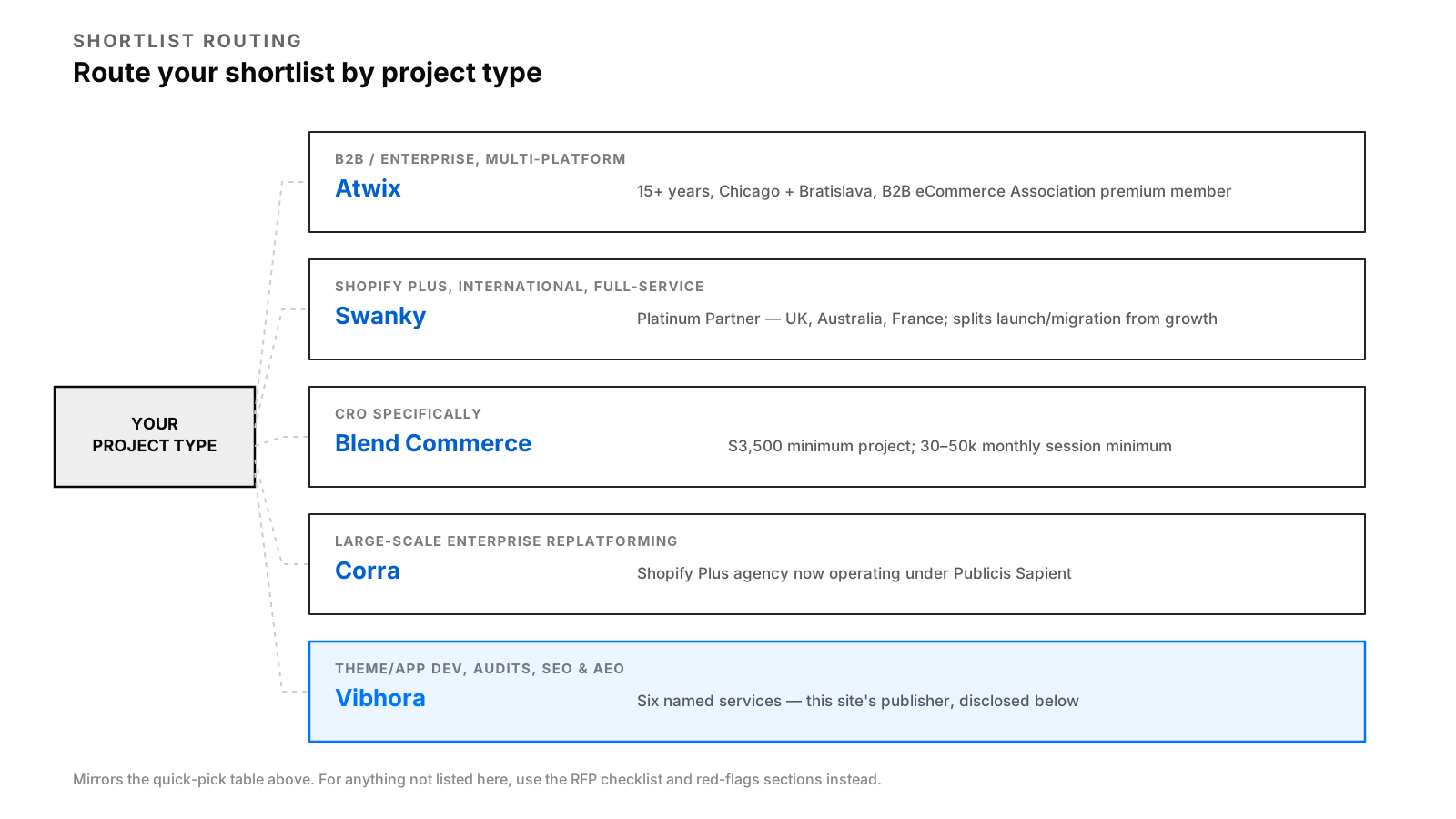
Quick-pick by need
| Best for | Agency | Why | Learn more |
|---|---|---|---|
| B2B / enterprise, multi-platform | Atwix | 15+ years, Chicago + Bratislava offices, B2B eCommerce Association premium member, named enterprise clients (per their own site) alongside Shopify, Adobe Commerce and BigCommerce work | Visit Atwix |
| Shopify Plus, international, full-service | Swanky | Shopify Platinum Partner, offices in the UK, Australia and France, splits its work explicitly into launch/migration and post-launch growth | Visit Swanky |
| CRO specifically | Blend Commerce | Works exclusively on Shopify/Shopify Plus conversion optimization, states a $3,500 minimum project size and a 30,000–50,000 monthly session minimum for new clients | Visit Blend Commerce |
| Large-scale enterprise replatforming | Corra | Shopify Plus agency now operating under Publicis Sapient, positioned for complex integrations and composable enterprise builds | Visit Corra |
| Shopify theme/app development, audits, SEO & AEO | Vibhora | Full-stack Shopify shop covering the build through the optimization: six named specializations — theme development, app development, headless builds, WordPress, SEO & AEO, and website/app audits — rather than one general offering. Publishes fixed prices on every service, with audits from $299 and theme work from $999, 10+ years of experience, and builds highly-converting, CRO-focused work for its clients | See Vibhora’s services |
For categories not covered above — a specific vertical, a specific region, a very small budget — use the RFP checklist and red-flags sections below to evaluate candidates directly rather than relying on any list, including this one, as a substitute for your own diligence.
In-house vs. freelancer vs. agency
- In-house makes sense once you have enough ongoing Shopify work to justify a full-time role, and you need institutional knowledge of your specific store to compound over time. It’s the slowest to spin up and the hardest to scale down.
- A freelancer is often the right call for a single, well-defined task with a clear scope — a theme tweak, a single app integration — where you can evaluate the work yourself and don’t need a team’s redundancy if one person is unavailable.
- An agency fits multi-disciplinary or ongoing work (design, development, CRO, migration) where you want one accountable team and don’t want to manage several individual contractors yourself. It costs more per hour than a freelancer in most cases; you’re paying for coordination and redundancy, not just the code.
RFP checklist and interview questions
- Ask for named client references you can actually contact, not just logos on a website — a reference that takes a call is worth more than a case study you can’t verify.
- Ask who specifically will work on your project, not just who’s in the sales call — agency capability and the specific team assigned to you are not always the same thing.
- Ask for a fixed-scope quote and a clear change-order process for anything outside that scope, before signing — vague scope is the most common source of budget overrun.
- Ask about post-launch support and its terms explicitly — what’s included, for how long, and what an hourly rate looks like after that period ends.
- Ask who owns the code, the theme customizations and any custom app after the engagement ends — this should be unambiguous in the contract, not assumed.
- Ask for their Shopify Plus partner tier or certification status if relevant to your build — verifiable directly with Shopify, not just claimed.
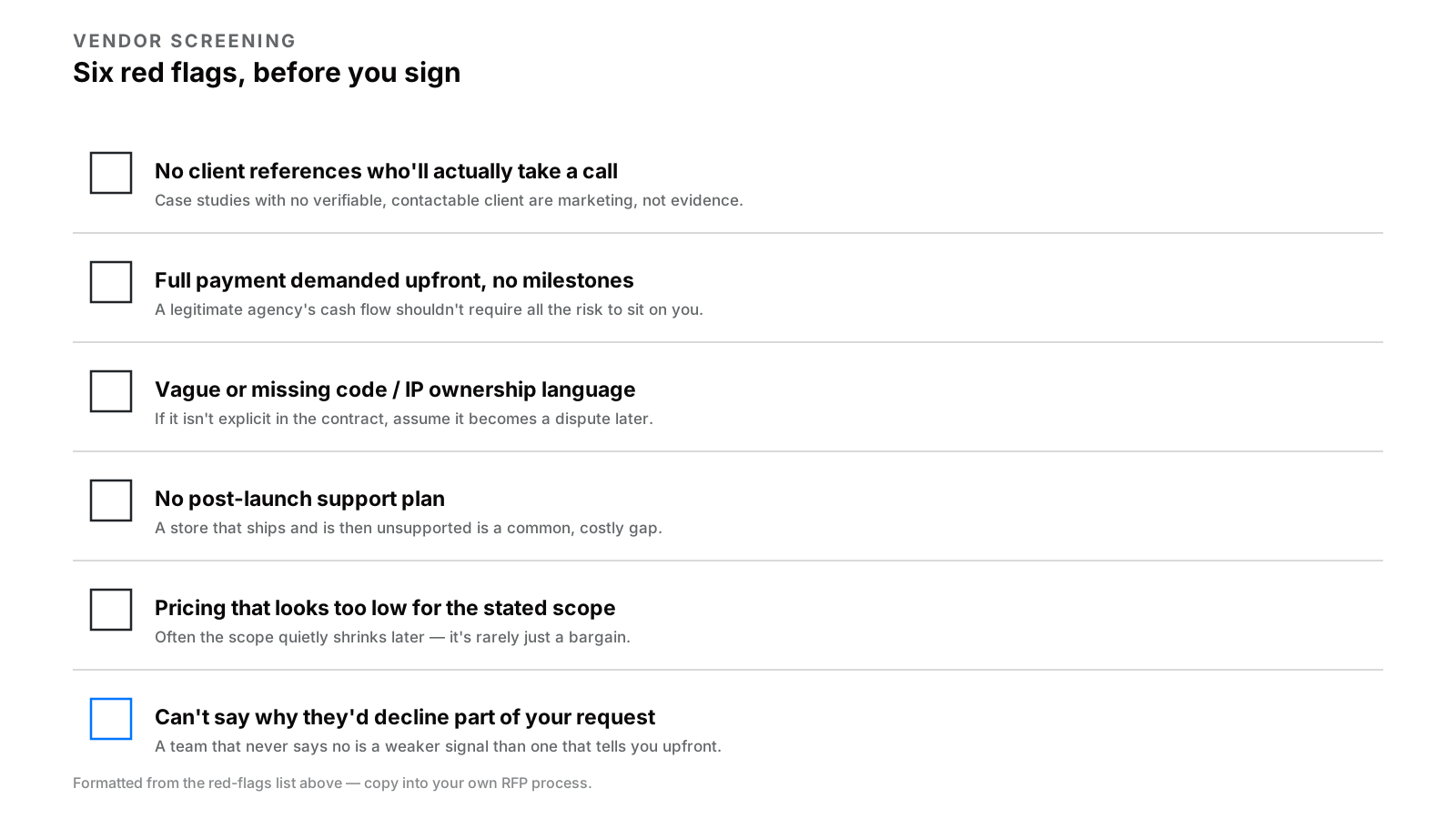
Red flags and contract risks
- No client references who’ll actually take a call. Case studies with no verifiable, contactable client behind them are marketing, not evidence.
- Full payment demanded upfront, with no milestone structure — a legitimate agency’s cash flow shouldn’t require the entire risk to sit on your side.
- Vague or missing language on code/IP ownership. If it isn’t explicit in the contract, assume it will be a dispute later, not a formality.
- No post-launch support plan — a store that “ships” and is then unsupported is a common and expensive gap, especially for a first-time Shopify build.
- Pricing that looks too low for the stated scope, with no explanation. Often this means the scope will quietly shrink, not that you found a bargain.
- An agency that can’t clearly describe why they’d say no to part of your request. An agency willing to say yes to everything in a sales call is a weaker signal than one who tells you upfront what your budget or timeline can’t actually support.
How to choose, by project complexity
- Simple store, standard theme, limited customization: a freelancer or a smaller agency is usually proportionate. See the store setup guide — much of this may not need outside help at all.
- Custom theme, meaningful catalog complexity, or a CRO program: a mid-size Shopify-focused agency with demonstrated work in your specific need (CRO, theme development) is the better fit than a generalist.
- Enterprise, B2B, multi-region, or a platform migration: look specifically for enterprise/B2B experience and named integration work (ERP, multi-region tax and currency) — this is where the wrong-sized agency shows up fastest as scope creep. Settle the platform-selection question before you brief anyone: a shortlist drawn up before you know whether you are staying on your current platform is a shortlist you will redraw.
Choose on evidence, not the sales category
Before comparing proposals, write one page that answers five questions: which template or workflow is losing money; what must be true on launch day; which systems have to exchange data; who will maintain the result; and what would make a rebuild unnecessary. Send that same page to every candidate. It makes competing scopes comparable and exposes the difference between a team that has understood the constraint and one that has repeated the brief back to you.
- Ask for the closest comparable project, not the prettiest one. A fashion launch is weak evidence for a B2B pricing workflow; a content migration is weak evidence for a custom checkout extension. Ask what was hard, who owned the integration, and what the team would do differently now.
- Test the proposed solution against the problem. If the issue is a slow product page, ask why the proposal is a rebuild rather than an audit and a targeted fix. If the issue is a capability the theme cannot supply, ask why an app or extension is not the smaller answer. A useful partner can explain the boundary.
- Compare ownership and operational cost. The quote is not the whole cost. Confirm which code, accounts, licenses, app subscriptions, analytics access and post-launch responsibilities will be yours when the engagement ends.
- Make measurement part of the scope. Define the baseline before work begins: a Core Web Vitals field-data view, a conversion funnel stage, an error rate, or another measure tied to the original problem. Do not accept a generic promise to “improve performance” without the page, device segment and measurement method.
- Use an audit when the decision is still open. A paid diagnosis is often cheaper than buying a confident but premature implementation plan. Vibhora’s Website & App Audit is designed for this point: its report can be taken to another team, and it may recommend targeted fixes instead of a rebuild.
Vibhora’s profile, disclosed
Vibhora publishes this guide and is also one of the options in it — read the rest of this list with that in mind, the same way you’d read any agency’s own “why choose us” page. Vibhora’s services are named individually rather than sold as one undifferentiated offering: Shopify Theme Development, Shopify App Development, Shopify Headless Development, WordPress Development, SEO & AEO Optimization, and the Website & App Audit referenced throughout this consolidation. As with every agency above, these figures are self-reported, not independently verified: Vibhora has 10+ years of experience, publishes fixed prices on every service, with audits from $299 and theme work from $999, and builds highly-converting, CRO-focused work for its clients. No client count, satisfaction percentage or ROI figure is claimed here — those numbers don’t exist yet in a form this site is willing to publish without evidence behind them; see the case-study note in the CRO guide for why.
FAQs
Is this list paid or sponsored?
No agency paid for inclusion or placement in this article. Vibhora, the publisher, is included and disclosed as such — not treated as a neutral entrant in its own ranking.
Why doesn’t this article rank agencies 1 through 10?
Because a single universal ranking flattens genuinely different specializations into one number, which is exactly how the old version of this page ended up citing an unsupported ROI figure to justify a rank. “Best for” categories are more honest about what actually differs between agencies.
How current are the review counts and ratings mentioned here?
This article deliberately doesn’t print specific review counts or star ratings, because they change continuously and any number printed here would be stale by the time you read it. Each profile links to that agency’s live listing so you can check current numbers yourself.
What should I do if my need doesn’t match any category above?
Use the RFP checklist and red-flags sections to evaluate candidates you find elsewhere — this guide is a framework for judgment, not a complete directory.
Written by Vibhora
Design-first, performance-focused Shopify development, migrations and optimization for ambitious brands.